
Mussels get scared too
There is good reason to clam up when parasites come calling. New research shows how the 'ecology of fear' can dramatically change the behaviour of blue mussels – with potential consequences that reach far beyond the individual mussel.

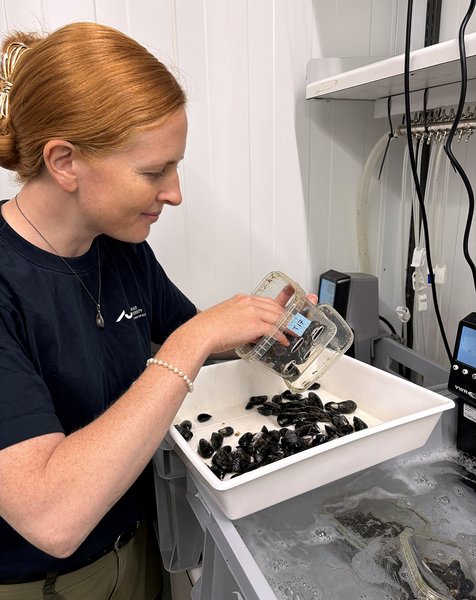
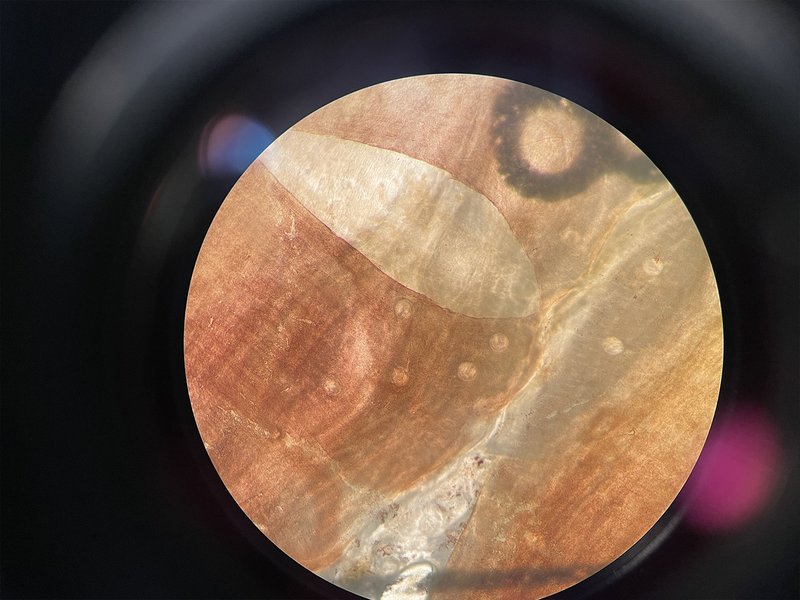
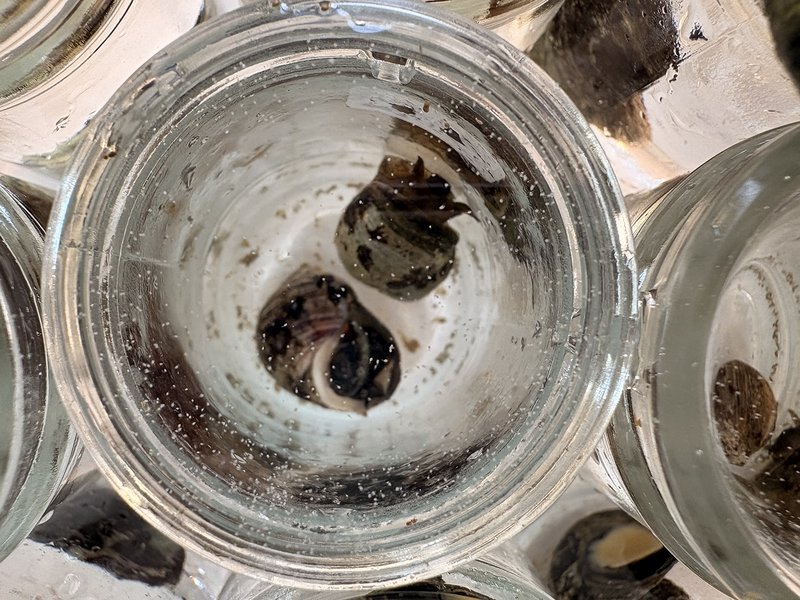
For a blue mussel, a good meal does not come entirely without risk.
Blue mussels feed by filtering microscopic algae from seawater. But some unwelcome guests can slip in along with their food. Tiny parasite larvae can hitch a ride as the mussel pumps water in and out.
New research from Aarhus University shows that blue mussels have a defence. When they detect the risk posed by certain parasites, they simply reduce their filtration. And when things get particularly risky, they can even close their shells completely.
This leaves the mussel with something of a dilemma: if it stops filtering, it stops eating. But there is more at stake than the mussel’s own dinner. A single large blue mussel can filter up to 100 litres of seawater a day, and millions of mussels can congregate in large beds.
Here, they act as ecosystem engineers. By filtering microalgae from the water, mussels affect water clarity and nutrient cycling. The beds themselves also form a landscape of shells, gaps and crevices that provide habitats for small animals, fish and plants. So when fear of parasites causes mussels to cut back on one of their most important activities, the effects could potentially be felt on a much larger scale.
“That is what makes this response so interesting. We are looking at something that happens in an individual mussel, but because blue mussels play such an important role in coastal ecosystems, even small changes in their behaviour could potentially matter on a much larger scale,” says PhD student Pernille Kibak, one of the researchers behind the study, which has just been published in the scientific journal Journal of Helminthology.
Fear changes mussel behaviour
The researchers explored the phenomenon in a series of laboratory experiments in which they exposed blue mussels to larvae from three different species of parasitic flatworm.
Two of the species can infect blue mussels, while the third infects fish and therefore does not pose the same threat. The clearest response occurred with the parasite Himasthla elongata. In its presence, the mussels reduced their filtration activity by 34 per cent. When the researchers combined H. elongata with another mussel parasite, Renicola roscovita, filtration fell by 51 per cent compared with the control group.
The researchers also found a clear link between filtration activity and the parasites’ success. The more actively a mussel filtered, the more parasites were subsequently found inside it. By reducing filtration, the mussel can therefore make it harder for parasites to get in.
“But what is particularly interesting is that the mussel responds to the risk before the parasite has had a chance to cause harm. It changes its behaviour simply because of the prospect of infection. That is exactly the mechanism we are talking about when we use the term ‘ecology of fear’,” says Pernille Kibak.
The concept originally comes from research into predators and prey. Predators do not shape their surroundings only by eating other animals. The mere risk of becoming someone else’s dinner can cause prey to change their behaviour, move to different areas, or spend more time keeping watch and less time feeding.
Researchers have since extended the idea to parasites. Although a parasite does not necessarily kill its host in the same way a predator kills its prey, infection can impair growth, survival and reproduction. Detecting danger early can therefore pay off.
The researchers also wanted to find out whether blue mussels can actually distinguish between parasites that can infect them and those that cannot. Here, the results were less clear-cut. The mussels responded differently to the three species, but variation between individual mussels was too great for the researchers to conclude that blue mussels can distinguish between the different parasite species.
Something in the water
The next experiment brought a surprise.
The researchers removed the parasites themselves and instead exposed the blue mussels to water containing chemical cues from common periwinkles. The snails pose no threat to blue mussels in themselves. But they play an important role in the parasites’ life cycles, because several of the parasites that later infect blue mussels first live and reproduce inside the snails.
The mussels nevertheless responded strongly. Chemical cues from the periwinkles alone caused their filtration activity to fall by almost 42 per cent compared with the control group.
“That was one of the things that surprised us most. The snail itself does not harm the mussel, but its presence can be a sign that parasites are nearby. It may almost work like a warning sign in the water: there is reason to be on your guard,” explains Pernille Kibak.
Blue mussels have a well-developed sensory system capable of detecting chemicals dissolved in the surrounding water. Food, predators, injured members of their own species and parasites can all alter the chemical composition of the water around them, providing signals to which the mussels can respond.
The researchers do not yet know exactly which signal causes the blue mussels to reduce their filtration. Water containing chemical cues from both parasites and infected snails did not cause significantly lower filtration than water containing cues from the snails alone. The results therefore suggest that cues from the periwinkle play an important role, but the precise chemical mechanism remains unknown.
That makes the finding all the more intriguing. A blue mussel spends most of its life anchored in place by strong byssal threads. It cannot simply flee when parasites appear. Instead, it has to respond to the information drifting past in the water.
When an entire mussel bed clams up
This creates a larger paradox: a response that may protect an individual mussel from parasites could potentially have consequences for the surrounding ecosystem if many mussels respond in the same way.
Mussel filtration helps move organic matter from the water towards the seabed and contributes to nutrient cycling in coastal ecosystems. The researchers therefore point out that reduced filtration could potentially affect the deposition of organic matter, nutrient cycling and the flow of energy through these ecosystems.
But there is a considerable leap from one mussel in a laboratory experiment to millions living in a natural mussel bed. Parasite abundance and environmental conditions vary in the wild, and mussels may be able to compensate for periods of reduced filtration by filtering more at other times.
“The laboratory experiments show some really interesting trends, but we cannot simply transfer them directly to a natural mussel bed. That is why it would be really interesting to study filtration activity in the field and see whether we find the same pattern under natural conditions,” says Pernille Kibak.
The question may become even more pressing as the oceans warm. Parasites pass through several life stages that are strongly dependent on temperature. Climate change could therefore alter both where parasites occur and when they are present in the water. At the same time, temperature affects the blue mussels’ own filtration activity and physiology.
“Parasites are often overlooked when we study mussel behaviour and ecology. But if we want to predict how mussels will respond to a changing climate, we also need to understand the direct and indirect effects of parasites,” she says.
The researchers are already pursuing that question. Among other things, they are studying mussels from areas where parasites are currently rare or entirely absent because temperatures are too low. If a warmer climate allows parasites to establish themselves and spread into these areas, the mussels may suddenly encounter a threat they have never faced before.
“The interesting question is whether those mussels will respond differently because they have not previously been exposed to parasites. That could give us a better understanding of how changes in parasite occurrence may affect mussel behaviour and ecology in the climate of the future,” Pernille Kibak concludes.
Contact
PhD Student Pernille Kibak
Department of Ecoscience, Aarhus University
Mail: pfkn@ecos.au.dk
Tel.: +4552119953
Jesper Bruun
Journalist, Aarhus University
Mail: bruun@au.dk
Tel.: +4542404140