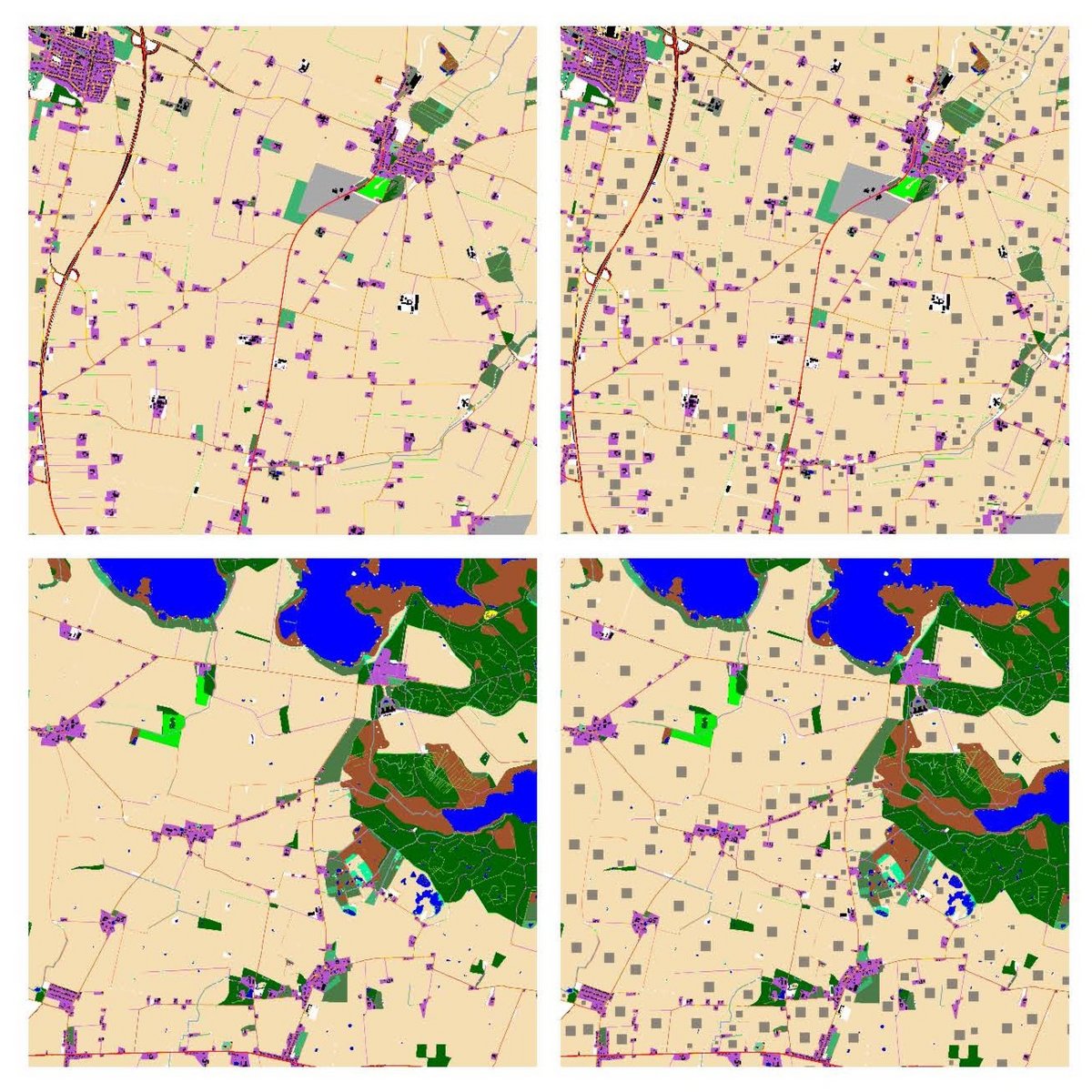
Agriculture can be organised in ways that benefit animals, plants and ecosystems
Researchers at Aarhus University have used advanced computer simulations to map out how agriculture can be organised to benefit biodiversity. The findings could prove crucial for the implementation of The Agreement of Green Denmark which aims to convert 140.000 hectares of low-lying agricultural land into natural habitats.

“Enhancing biodiversity is not as straightforward as it sounds, because it depends on which species you want to support,” says Trine Poulsen. She is a postdoctoral researcher at the Department of Agroecology at Aarhus University and has recently completed a four-year research project that could help us design landscapes where agriculture takes greater account of animals, plants and ecosystems.
“Measures such as creating hedgerows and scrubland between fields are highly beneficial for most species. But then you have the skylark, which thrives in large, open fields with uninterrupted views. If the landscape becomes more fragmented, its population may decline,” she explains, highlighting a classic dilemma in nature conservation. The difference is that she and her colleagues can now demonstrate this using an advanced computer model that has been under development for 25 years and now provides a detailed picture of the future Danish landscape.
The Hunger Games meets Minecraft
The simulation model is called ALMaSS – the Animal, Landscape and Man Simulation System – and was developed by researchers at the Department of Agroecology. It represents a relatively new approach to biodiversity research and, based on extensive weather and landscape data, can help individual farmers identify the most effective measures for their own farms.
“The actions farmers should take can depend on where they are located. For example, if you already farm in an area with many field boundaries, creating an additional one may not make much difference. Perhaps what is needed instead are more flower strips. You always have to take into account the wider landscape that surrounds the farm,” says Trine Poulsen.
In what resembles a cross between The Hunger Games and Minecraft, different species are released into a simulated world – one species at a time. Researchers can then determine how they respond to the landscape and whether they are able to find food and suitable nesting sites.
“One of the things that really surprised us was the simulation of the red mason bee, a wild bee species. We found that flower strips in agricultural fields had no effect whatsoever on their populations because they bloom far too late compared with the period when the bees are active. Instead, we discovered that hedgerows and scrubland – which flower earlier in the season – are much more beneficial, partly because they also provide habitat for the bees,” she says.
A comfort blanket
One of the key elements of Denmark’s Green Tripartite Agreement is the conversion of 140,000 hectares of low-lying agricultural land. These areas currently release significant amounts of CO₂ when cultivated. Trine Poulsen hopes the research project can contribute to a better understanding of how the landscape should be managed and designed in the years ahead. However, she is concerned that the Green Tripartite Agreement could also create a false sense of completion among stakeholders.
“I worry that the Green Tripartite Agreement could overshadow the type of work we are doing. The agreement is largely about taking large areas of land out of agricultural production and restoring them to nature, which is both important and necessary. But if farmers then think they have already contributed to biodiversity by setting aside land for large nature areas and can therefore do whatever they like on the rest of their farmland, then we have a problem.
“Biodiversity should not only be strengthened in national parks and protected nature areas. We also need to create better conditions across the agricultural landscape that continues to be farmed.”
At the Nature Meeting (Naturmødet) in Hirtshals on 29 May, Trine Poulsen will present her research findings. She is already working on a follow-up project aimed at making biodiversity measurable on agricultural land.
Facts about the project
Organic+ and EcoMetric are interdisciplinary projects involving social scientists, software developers and biologists from Aarhus University, working in collaboration with the Innovation Centre for Organic Farming and a range of industry partners.
The Organic+ and EcoMetric projects form part of the Organic RDD programme, coordinated by ICROFS. The programme has received funding from GUDP under the Danish Ministry of Food, Agriculture and Fisheries.