
The right medicine for every patient
A growing number of people in Denmark are living with inflammatory bowel disease, placing increasing pressure on the healthcare system. In a new research initiative, scientists are growing artificial organs from stem cells to help tailor treatment to individual patients. An approach that could improve outcomes while saving society billions.

It is immediately obvious that the young patient has been through this before. Twenty-one-year-old Oliver lies perfectly still on the examination table as a doctor at Aarhus University Hospital carefully guides a thin, flexible endoscope through his rectum to perform a colonoscopy. The past few months have been marked by constant pain, and now it is time to try yet another treatment.
Oliver was diagnosed with Crohn's disease seven years ago. The condition is a chronic inflammatory disease of the digestive tract. Since then, he has worked his way through a long list of treatments and medications, none of which has delivered the desired results.
"The medication I've been given so far has caused a lot of side effects. My skin became extremely dry and itchy, making it difficult to sleep, which affected both my studies and my social life. It was incredibly frustrating. I've also lost my hair, and as a 21-year-old, it's obviously upsetting to be developing a receding hairline," he says.
His doctor, Anders Kirch Dige, gently manoeuvres the endoscope further through Oliver's colon to examine the inflammation more closely and to understand why the daily tablets and the weekly injectable medication, which Oliver administered himself using an injection pen, have failed to control his symptoms. Instead, he has continued to experience diarrhoea and blood in his stool.
"At the moment, we try different treatments until we find one that works. During that process, patients inevitably have to live with more of the burden of their disease, and unfortunately there are still some patients for whom we simply cannot find an effective treatment. In many cases, they eventually have to undergo surgery," says Anders Kirch Dige.
The Danish gut
When it comes to inflammatory bowel diseases such as Crohn's disease - collectively known as IBD - Denmark has one of the highest prevalence rates in the world. The disease disproportionately affects young people like Oliver, and the number of patients is expected to rise significantly for many years to come. That is the conclusion of a major global study published in Nature last year, which mapped the epidemiological stages of IBD across 82 geographical regions. In 2014, 0.86 per cent of the Danish population was living with IBD. According to the study, that figure is projected to increase to 1.59 per cent by 2043 - equivalent to around 100.000 people in Denmark.
"We are already struggling to cope with these diseases today, so what are we going to do in the future? It is essential that we use these projections to prepare, because there will be a great deal to do," Professor and consultant gastroenterologist Johan Burish, one of the study's co-authors, told Sundhedspolitisk Tidsskrift when the findings were published.
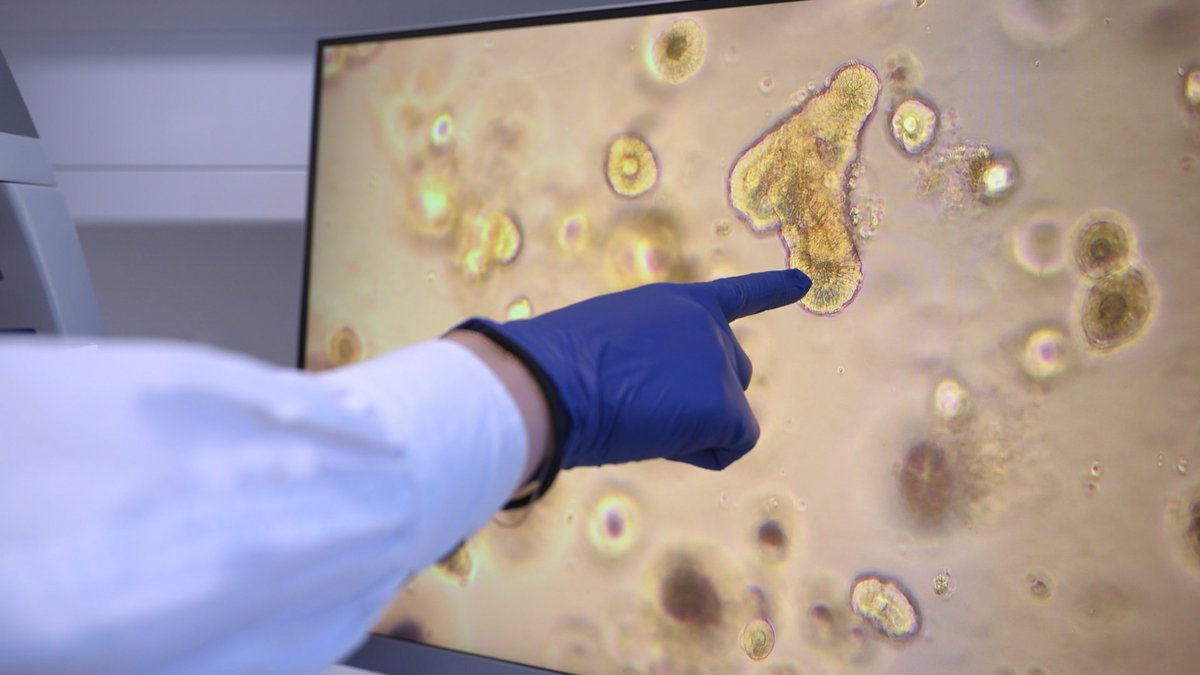
The future is already beginning to take shape. In a newly established research section at the Department of Biological and Chemical Engineering at Aarhus University, scientists are currently growing intestinal organoids in the laboratory. These miniature organs replicate a patient's own cells, forming three-dimensional structures that allow researchers to test different drugs and treatment strategies. In other words, patients like 21-year-old Oliver no longer have to serve as test subjects while doctors search for the right treatment.
60.000 biological blueprints
In Denmark, the infrastructure for personalised medicine is operated by the Danish National Genome Center in collaboration with the country's five regions. At its core is a supercomputer and a database which, after several years of data collection, now contains the genomes of 60,000 patients. A genome is essentially a biological blueprint containing all the DNA needed to build and maintain a living organism.
"Today, 17 selected patient groups are offered genome sequencing and tested for conditions such as cancer and inherited diseases. But if, alongside this, we can use these miniature organs to test which medicines work on a patient's own cells, we can tailor treatment for each individual patient even more precisely," says Bettina Lundgren, Deputy CEO of Healthcare Denmark and former Director of the Danish National Genome Center. She believes the database of 60,000 genomes could make organoid-based research even more valuable.
"New technologies have enormous potential for personalised medicine. But if patients are to benefit, we must be able to demonstrate where they create real value and have the infrastructure, data and clinical workflows needed to use them safely and responsibly within the healthcare system."
The complexity of cancer
Internationally, personalised medicine is also moving towards using organoids alongside genetic data rather than relying on genetics alone. Only a minority of cancer patients currently receive an effective targeted treatment based solely on genetic analyses, because these do not fully capture the biological complexity of a tumour.
To address this, researchers from the Department of Molecular Medicine at Aarhus University and Aarhus University Hospital have launched a study investigating whether treatment for children, adolescents and adults with advanced cancer can be improved by combining genomic profiling with organoid technology.
Over the course of a year, the team will create small three-dimensional tumour models from samples donated by 75 patients. These models will then be tested against a range of cancer drugs. A key objective is to provide treatment recommendations to clinicians within four weeks, allowing the results to be used in routine clinical practice.
For 21-year-old Oliver, who has lived with Crohn's disease since childhood, another new treatment now lies ahead. Which one he receives will depend on the results of today's colonoscopy. But it is not only the disease he has to live with - it is also the uncertainty.
"People with inflammatory bowel disease can have an increased risk of cancer. I would be incredibly relieved if there were a way to make sure I received the right medication from the start instead of being a test case while doctors try different options. Then I wouldn't have to spend so much time worrying," he says.
What are organoids?
- Organoids are three-dimensional cell cultures grown in the laboratory from stem cells or tissue-derived cells. They replicate key structures and functions of human organs.
- Organoids can be developed to resemble organs such as the intestine, brain, liver, lung, kidney and pancreas.
- They are not fully developed organs, but laboratory models that mimic important biological processes.
- The technology was developed in the late 2000's and has since revolutionised biomedical research.
- Researchers use organoids to study diseases, test new medicines and investigate human development.
- In some cases, organoids can be grown from an individual patient's own cells, making them a promising tool for personalised medicine.