Aarhus University logo
Dansk
Faculty of Technical Sciences
Aarhus University will once again have a strong presence at The Climate Festival in Middelfart, where AU researchers will contribute to 25 debates,…
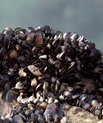
There is good reason to clam up when parasites come calling. New research shows how the 'ecology of fear' can dramatically change the behaviour of…
Researchers at Aarhus University will use laboratory-grown mini-organs to investigate how bacteria and viruses alter human tissue and increase the…
Denmark is producing less fruit and vegetables while imports continue to rise. But research suggests that innovative cropping systems can reduce…
Interest in Aarhus University's Bachelor of Science (BSc) in Engineering programmes continues to grow, while the number of available study places is…
Aarhus University and VIA University College have decided to open a joint innovation office on VIA's campus in Horsens, where all of VIA’s engineering…
The applause echoed through the lecture halls as this summer's new engineers were celebrated at Aarhus University's graduation ceremony. They are now…
Just a few years ago, Power-to-X was driven by bold ambitions, soaring expectations and, ultimately, a dose of reality. Today, the landscape looks…
A growing number of people in Denmark are living with inflammatory bowel disease, placing increasing pressure on the healthcare system. In a new…
New Horizon Europe project aims to demonstrate how spintronics can power a new generation of European chips while reducing the energy consumption of…
Leading researchers, industry experts and innovators will gather in Aarhus next week to discuss the technologies needed to reduce Europe's dependence…
New collaboration between Aarhus University, Topsoe and PlanEnergi aims to remove a major barrier to large-scale green fuel production
Imagine your doctor being able to test medication on a miniature version of your body before prescribing it to you. Using stem cells, your intestine,…
Researchers have shown that seaweed can be cultivated successfully in offshore wind farms. The technology is scalable and the challenge now is not how…
New technologies could help detect serious diseases years earlier. The challenge is no longer developing the technology but building a healthcare…
Time has come for a greener, healthier and more resilient and competitive food system. Yet the transformation is progressing slowly. Our ways of…
Researchers at Aarhus University have used advanced computer simulations to map out how agriculture can be organised to benefit biodiversity. The…
If the goal is to strengthen biodiversity, it is not enough simply to establish vast areas of uniform forest plantation, which may become one of the…
Once again this year, Aarhus University will be strongly represented at Naturmødet in Hirtshals. AU researchers will contribute to 32 debates and…
From the future of healthcare to cybersecurity and beer brewing, researchers from Tech and across Aarhus University will gather in Allinge this June…
Scientists identify hydrogen radicals as the key driver in PFAS breakdown, opening the door to more effective and chemical-free water treatment…
Lotte Thøgersen, Dean of Engineering and Business Programmes at VIA University College in Horsens, will spend part of her working time seconded to…
Cybersecurity is becoming a critical competitive factor in tomorrow’s society. That is the message from Jens Myrup Pedersen, who takes up a…
Livestock systems are central to global challenges related to food security, climate change, and biodiversity. Addressing these challenges requires…
Taste, see, touch, and experience the foods of the future up close when the Department of Food Science from Aarhus University takes part in Madens…
Researchers have mapped how allergic reactions unfold at the molecular level – and demonstrate how tailored antibodies can block life-threatening…
Long before words like genetics or DNA existed, humans began to influence the development of plants and in doing so, their own development as well.…
New research shows that microscopic algae on the Greenland ice sheet sustain themselves on meltwater in a self-reinforcing process that contributes to…
Researchers at Aarhus University have developed a catalyst that can weaken one of the strongest bonds in chemistry, opening a new path for more…
The lack of collaboration between Western and Russian researchers in the Arctic is creating significant uncertainty about climate change. At Aarhus…
These days, one of the world’s largest Arctic conferences is taking place at Aarhus University, where researchers from across the globe are meeting to…
The Grundfos Foundation | PDJF has awarded 40 million DKK (5.35 million EUR) to Aarhus Universitet to support the launch of EIT Water, the newest…
This August, the first MSc in Engineering students will begin a new specialisation in cybersecurity at Aarhus University. The programme aims to…
Søren Wandahl has held several leadership positions at the Department of Civil and Architectural Engineering. He is now taking over as head of the…
People with type 2 diabetes are primarily treated with synthetic insulin. But a new study suggests that medicine originally meant for treatment of…
Many newly graduated engineers from Aarhus University are now ready to make their mark on a world that needs their knowledge and engagement.
A new scientific paper shows how life cycle assessment (LCA) can be used to quantify the CO₂ savings from energy retrofits. However, the author argues…
A four-year project aims to diversify Denmark’s plant-based protein sources by introducing soybeans and lupins into local fields and eventually onto…
New research shows that heat waves, droughts, rain on snow and sudden thaws may have a greater impact on Arctic ecosystems than gradual warming – and…
Their bachelor project demonstrates how single-family homes can be renovated and converted into multi-family units, as part of a solution to the…
Imagine a future where chemical regulation anticipates risks before they spiral into ecological crises. That future may be closer than we think.…
An international team of researchers asked 517 experts: What happens if we drastically cut pesticide use? The answer points to major gains for the…
Aarhus University, together with an international team of researchers, has documented how a massive underwater volcanic eruption in 2022 injected…
It will not be a five-star hotel experience, but Kristian Nissen outlines what a modern civil defence shelter could look like. Inspired by our…
Professor Mogens H. Greve is tasked with bringing the EU’s new Soil Monitoring Law, recently published in the EU’s Official Journal, to life in…
Straight from his civil engineering studies, Gustav Kristensen began developing custom foundations for offshore wind turbines. By fine-tuning these…
New DFF-funded project supports Denmark’s Green Transition by providing science-based predictions to guide afforestation strategies and maximise…
With his digital quantity model, clients and contractors can save time, cut costs, and reduce errors – and according to industry experts, it addresses…
A new documentary premiered at COP30 spotlights Aarhus University’s Centre for Circular Bioeconomy, revealing how interdisciplinary research and…
A new technology makes it possible to produce protein from CO₂ and green electricity and today marks the opening of a pilot plant that could bring the…